Newsletter Subscribe
Enter your email address below and subscribe to our newsletter

 ByJohn A
Businesses store large amounts of sensitive information on computers, servers, laptops, and other digital storage devices. This information may include financial records, employee details, client data, business documents, and confidential operational information. When these devices reach the end of their useful life, simply deleting files or formatting a drive may not be enough to prevent unauthorised access.
Professional hard drive destruction provides a way to permanently destroy storage media and reduce the risk of data exposure. For organisations handling confidential information, hard drive shredding in Chicago can be an important part of a responsible IT asset disposal and data security strategy. Understanding why this process matters helps businesses protect information, manage retired equipment, and strengthen their overall security practices.
Businesses handle information that should not be accessible to unauthorised individuals. Even when computers and servers are no longer in use, their storage devices may contain recoverable data.
Deleting files usually removes references to the data rather than immediately eliminating every underlying data record. Similarly, formatting a drive may leave information recoverable with specialised tools, depending on the method used.
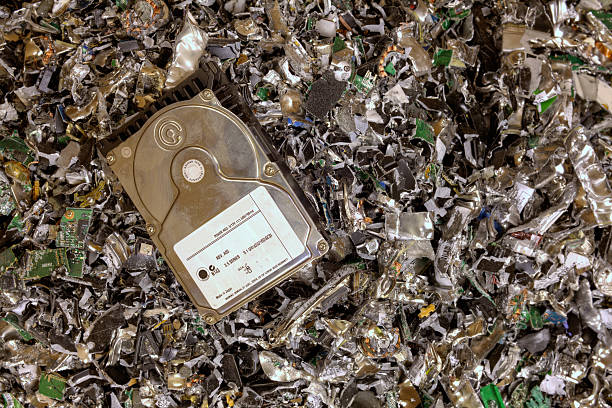
Physical hard drive shredding destroys the storage device into small fragments, making it significantly more difficult or impossible to reconstruct and access the original information.
Businesses may store customer contact details, financial statements, contracts, internal communications, and employee records on their hard drives. If these devices are discarded without proper destruction, the information could become accessible to unauthorised parties.
Secure destruction helps organisations reduce this risk when retiring old computers, replacing servers, or disposing of outdated storage equipment.
A data breach can expose confidential information and create financial, operational, and reputational problems. Improper disposal of IT equipment is one potential source of data exposure that businesses should address.
Old hard drives may remain in storage rooms, equipment cupboards, or warehouses for months or years. These devices can become difficult to track, particularly when a business replaces large numbers of computers or upgrades its IT infrastructure.
Professional hard drive shredding in Chicago helps businesses establish a controlled process for destroying retired drives instead of allowing them to remain unused and potentially vulnerable.
Data protection should extend beyond active computer systems. Businesses should establish procedures covering the entire lifecycle of their information, from creation and storage to retention and final destruction.
Including physical destruction in these procedures helps close a potential security gap that may otherwise remain after equipment is removed from everyday use.
Many organisations must follow legal, contractual, or industry-specific requirements when handling confidential information. These obligations may govern how records are stored, accessed, retained, and destroyed.
The exact requirements depend on the type of information a business handles and the laws or agreements that apply to its operations. Organisations working with healthcare information, financial records, or personal data may have specific obligations regarding information security and disposal.
Businesses should identify applicable requirements before selecting a destruction method and retain appropriate documentation of their disposal procedures.
Documented destruction procedures help businesses demonstrate that retired storage devices were handled according to established policies. Depending on their needs, organisations may maintain asset inventories, destruction dates, device identifiers, and certificates of destruction.
Professional services may offer documentation that supports internal audits and compliance reviews. Businesses should confirm which records are provided and whether they meet their specific requirements.
Growing organisations often replace computers, servers, and storage systems as part of regular technology upgrades. Managing the resulting volume of retired hard drives can become challenging without a structured disposal process.
Businesses replacing dozens or hundreds of computers may need to destroy numerous storage devices within a defined period. Coordinating this process internally can require additional staff time, equipment, and secure storage arrangements.
Professional shredding services can help organise the collection, handling, and destruction of large quantities of drives according to an agreed schedule.
An accurate inventory helps businesses identify which hard drives have been removed, which are awaiting destruction, and which have already been destroyed.
Tracking each device reduces the likelihood of drives being misplaced or accidentally returned to circulation before the data has been securely destroyed.
Office relocations, facility closures, and data centre moves often involve the removal of outdated or unnecessary IT equipment. These situations can create additional data security challenges because many devices may be handled within a short period.
Before relocating equipment, businesses should separate functioning devices that will be reused from storage devices that are no longer required. This assessment helps determine which drives need migration, secure erasure, storage, or physical destruction.
Devices containing sensitive information should remain under appropriate access controls until their final disposal method has been completed.
During a move, hard drives can become separated from their asset records or mixed with equipment intended for resale or recycling. Clear labelling, documented handovers, and verified destruction procedures help prevent these mistakes.
Planning destruction in advance can also reduce the amount of obsolete equipment that needs to be transported to a new facility.
Businesses can choose between different methods of sanitising storage devices. The appropriate option depends on the device type, its condition, future use, and the sensitivity of the information stored on it.
Hard drive shredding is particularly useful when devices are damaged, obsolete, unsuitable for reuse, or no longer required for operational purposes. The physical destruction process makes the original storage media unusable.
However, shredding should be performed using equipment suitable for the specific storage technology. Traditional magnetic hard drives and solid-state drives store information differently, so businesses should confirm that the selected process is appropriate for each device.
See also: The Growing Role of Stablecoins in Digital Finance
When a device will be reused, secure data sanitisation may be a suitable alternative. Proper sanitisation methods are designed to make previous information inaccessible while allowing the device to remain functional.
Businesses should select the method according to their security requirements and asset reuse plans. Where physical destruction is required, erasure alone may not meet the organisation’s objectives.
Managing hard drive destruction internally can require planning, secure handling arrangements, staff training, suitable equipment, and verification procedures. These responsibilities may be difficult to manage alongside everyday IT operations.
Professional services can help businesses coordinate equipment collection, inventory checks, transportation, and destruction. The exact services available will depend on the provider and the agreed arrangements.
This support allows internal teams to focus on business operations while maintaining a defined process for retired storage devices.
Rather than treating hard drive destruction as an occasional task, businesses can establish a consistent procedure for handling devices at the end of their lifecycle.
A repeatable workflow may include identifying retired drives, recording asset details, restricting access, arranging destruction, obtaining documentation, and updating inventory records. Consistency improves accountability and makes future disposal projects easier to manage.
Hard drive destruction is only one part of managing obsolete technology. Computers, servers, and other equipment may contain reusable components and recyclable materials that should be handled responsibly.
Businesses should ensure that storage devices containing confidential information are securely destroyed before the remaining equipment enters an appropriate recycling or recovery process, where required by their security policy.
This helps prevent sensitive information from leaving the organisation through ordinary electronic waste channels.
Before arranging hard drive shredding in Chicago, businesses should consider the quantity and type of devices involved, collection requirements, security controls, destruction standards, and available documentation.
They should also clarify how devices will be tracked from collection through final destruction. These checks help organisations select a process that supports both data protection and responsible asset management.
Businesses need professional hard drive shredding in Chicago when they must permanently destroy storage devices containing sensitive information and reduce the risk of unauthorised data recovery. The process can be particularly valuable during IT upgrades, office relocations, equipment retirement, and large-scale technology disposal projects.
By combining physical destruction with accurate inventory records, secure handling procedures, appropriate documentation, and responsible recycling practices, organisations can strengthen their data security approach. Evaluating storage devices and selecting a suitable destruction method also helps ensure that information is handled appropriately throughout the equipment lifecycle.
A well-planned hard drive destruction process protects confidential records, supports internal accountability, and helps businesses manage obsolete technology more securely.